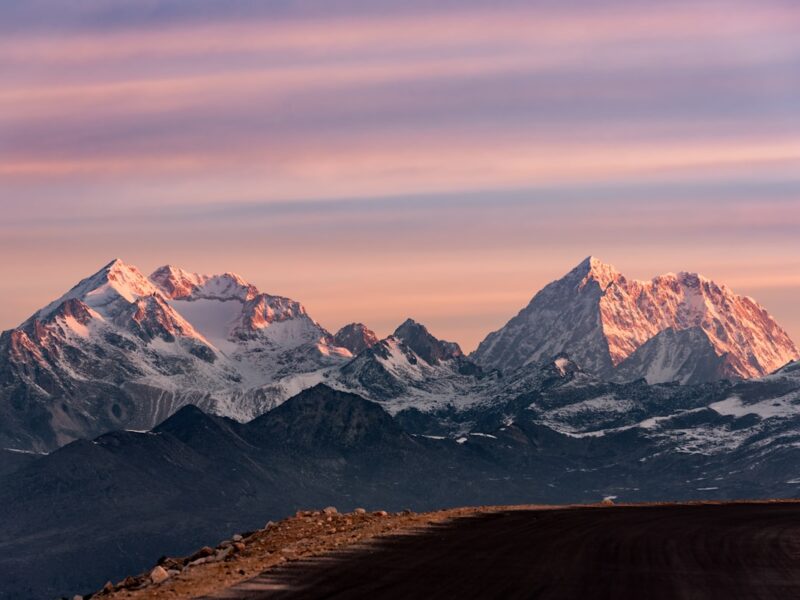
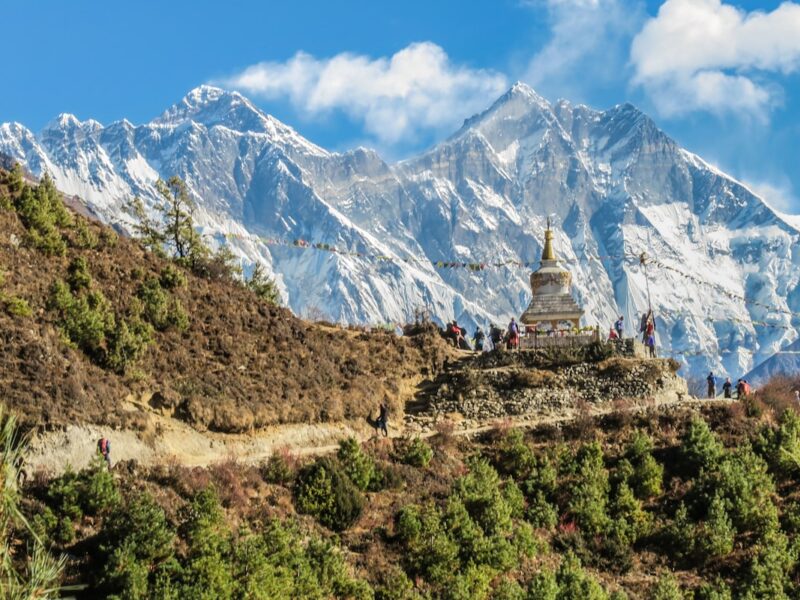
The Langtang Valley trek is Nepal’s most underrated Himalayan adventure. Just a bumpy 7-hour bus ride from Kathmandu — no expensive flights, no restricted permits — this 7–10 day trek takes you through ancient Tamang villages, dense rhododendron forests, and a glacial valley dominated by the imposing Langtang Lirung (7,227m). At the journey’s end, you’ll reach Kyanjin Gompa (3,870m), where you can taste fresh yak cheese at the government dairy, explore a centuries-old Buddhist monastery, and scramble up Kyanjin Ri (4,773m) for one of Nepal’s most rewarding panoramic views.
Langtang doesn’t get the crowds of Everest Base Camp or the Annapurna Circuit, and that’s precisely what makes it special. The trail was heavily damaged in the devastating 2015 earthquake, but the Tamang communities have rebuilt with remarkable resilience. Trekking here today directly supports these families — and you’ll experience a warmth and authenticity that busier routes sometimes lack.
This guide covers everything you need to plan and complete the Langtang Valley trek — day-by-day itinerary, costs, permits, packing essentials, accommodation, and honest advice on fitness and altitude.
Langtang Valley Trek Overview
| Duration | 7–10 days (trek only) + 2 days travel from/to Kathmandu |
| Maximum Altitude | 4,773m (Kyanjin Ri) or 5,033m (Tserko Ri) |
| Difficulty | Moderate — suitable for fit beginners with some hiking experience |
| Best Season | October–November, March–May |
| Total Cost | $350–600 (₹29,000–50,000) including guide, porter, permits, food |
| Permits Required | TIMS card ($20) + Langtang National Park entry (NPR 3,000) |
| Starting Point | Syabrubesi (7–8 hours by bus from Kathmandu) |
| Nearest City | Kathmandu (no Pokhara connection needed) |
Why Trek Langtang Valley?
With so many treks to choose from in Nepal (see our which Nepal trek should I choose guide for a full comparison), here’s why Langtang deserves serious consideration:
Closest Himalayan Trek to Kathmandu
No flights, no long detours through Pokhara. Langtang National Park starts just 60 km north of Kathmandu as the crow flies. The bus ride to Syabrubesi takes 7–8 hours along the Trisuli River valley — scenic, if bumpy. This makes Langtang the most time-efficient mountain trek in Nepal.
Fewer Crowds, More Authenticity
While the Annapurna and Everest regions attract over 100,000 trekkers annually each, Langtang sees a fraction of that. You’ll share tea houses with maybe 10–15 other trekkers instead of 50–100. The Tamang families who run the lodges have time to sit and chat. On quieter days, you might be the only guest.
The Tamang Heritage
The Langtang Valley is home to the Tamang people — one of Nepal’s largest indigenous groups with deep Tibetan Buddhist roots. Their culture, language, and architecture are distinct from the Sherpa (Everest region) and Gurung (Annapurna) communities. You’ll see colourful prayer flags strung across every village, mani walls carved with Tibetan script, and small gompa (monasteries) where monks still chant at dawn.
The 2015 Earthquake Recovery Story
On April 25, 2015, a massive landslide triggered by the earthquake buried the village of Langtang, killing over 350 people — the single deadliest site in the entire earthquake. The trail was closed for months. Today, the villages have been rebuilt (some in new locations), tea houses are operating, and the Tamang community has shown incredible resilience. Trekking here contributes directly to their ongoing recovery.
Stunning Side Trips
The main trek to Kyanjin Gompa is just the start. From there, you can scramble up Kyanjin Ri (4,773m, 3–4 hours return) for panoramic views, attempt the more challenging Tserko Ri (5,033m, 6–7 hours return) for even bigger vistas, or walk further up the valley to Langshisha Kharka (4,285m) — a remote, glacially-carved meadow that few trekkers visit.
Day-by-Day Langtang Valley Trek Itinerary
This 9-day itinerary includes proper acclimatization and the Kyanjin Ri side trip. You can shorten it to 7 days by combining days or skipping rest days, but we recommend the full itinerary for a better experience.
Day 1: Kathmandu to Syabrubesi (1,550m) — Bus, 7–8 hours
The journey from Kathmandu starts early — most buses leave from Machhapokhari Bus Park around 7 AM. The road follows the Trisuli River through terraced hills, passing through the market town of Dhunche (the district headquarters and permit checkpoint). The last stretch to Syabrubesi is rough but scenic. Bus tickets cost NPR 700–1,000 (₹440–630). Jeep hire is faster (5–6 hours) but costs NPR 15,000–20,000 for the vehicle.
Stay: Basic tea houses in Syabrubesi. Hot showers available. Stock up on any last-minute supplies — there’s a small market with trekking snacks, batteries, and SIM card top-ups.
Day 2: Syabrubesi to Lama Hotel (2,480m) — 6–7 hours
The trek begins with a steep descent to the Langtang Khola (river), then a long climb through dense forest — oak, rhododendron, and bamboo. You’ll cross several suspension bridges and might spot langur monkeys. The trail is well-marked but involves significant elevation gain. Lama Hotel is a cluster of tea houses in a forest clearing — not an actual hotel despite the name.
Meals: Daal bhaat (₹400–500), noodle soup, chapati with vegetables. Tea/coffee ₹100–150.
Day 3: Lama Hotel to Langtang Village (3,430m) — 5–6 hours
The forest gradually thins as you gain altitude. You’ll pass through Ghoda Tabela (a former Tibetan army post, now a national park checkpoint) and Thyangsyap before reaching Langtang Village — rebuilt after the 2015 earthquake in a new location slightly uphill from the original site. The valley opens up dramatically here, with views of Langtang Lirung’s massive ice-clad south face.
Note: The original Langtang Village was destroyed by the earthquake-triggered landslide. A memorial marks the site. Many trekkers pause here to pay respects.
Day 4: Langtang Village to Kyanjin Gompa (3,870m) — 3–4 hours
A relatively short and gentle day — which is important because you’re now above 3,500m and need to let your body adjust. The trail follows the valley floor through yak pastures and past mani walls. Kyanjin Gompa is a small settlement centred around an ancient Buddhist monastery and the famous government yak cheese factory (yes, you should try the cheese — it’s surprisingly good).
Afternoon: Explore the monastery, visit the cheese factory, and take a gentle walk up the valley toward the glacier. This helps with acclimatization.
Day 5: Acclimatization Day — Kyanjin Ri (4,773m) or Tserko Ri (5,033m)
This is the highlight of the trek. You have two options:
Kyanjin Ri (4,773m, 3–4 hours return): A steep but non-technical scramble directly above Kyanjin Gompa. The summit offers 360-degree views of Langtang Lirung, Ganesh Himal, Dorje Lakpa, and the Tibetan border peaks. Start early (6 AM) for the clearest skies. This is the better option if you’re a moderate trekker.
Tserko Ri (5,033m, 6–7 hours return): A more challenging climb that takes you above 5,000m. The views are even more expansive, but the altitude is real — you’ll feel the thin air. Only attempt this if you’ve acclimatized well and feel strong. The trail is marked with cairns but can be confusing in cloud.
Return: Back to Kyanjin Gompa for the night. Celebrate with butter tea and more yak cheese.
Day 6: Optional — Langshisha Kharka (4,285m) Side Trip
If you have an extra day, the walk up the valley to Langshisha Kharka is stunning. The trail passes yak herders’ camps and crosses glacial moraines. Few trekkers come this far, and the views of the upper Langtang Glacier and surrounding peaks are extraordinary. It’s a 5–6 hour return trip from Kyanjin Gompa. Return and sleep at Kyanjin Gompa.
Day 7: Kyanjin Gompa to Lama Hotel (2,480m) — 6–7 hours
Retrace your steps down the valley. The descent is easier and faster than the ascent. You’ll cover in one day what took two days going up. The changing perspective reveals views you missed on the way up. Many trekkers overnight at Lama Hotel, though strong walkers sometimes push on to Syabrubesi in a very long day.
Day 8: Lama Hotel to Syabrubesi (1,550m) — 5–6 hours
Continue the descent through the forest back to Syabrubesi. The final climb up to the village from the river can feel surprisingly tough after days of descending. Celebrate completing the trek with a hot shower and cold beer at your tea house.
Day 9: Syabrubesi to Kathmandu — Bus, 7–8 hours
Early morning bus back to Kathmandu. Alternatively, some trekkers continue to the Gosainkund Lakes trail (adds 3–4 days) or connect to the Helambu circuit for a longer trek.
Langtang Valley Trek Cost Breakdown
Langtang is one of Nepal’s most affordable treks. Here’s what to expect (all prices approximate for 2026):
| Expense | Cost (NPR) | Cost (INR approx.) | Cost (USD approx.) |
|---|---|---|---|
| Bus: Kathmandu–Syabrubesi (return) | 1,400–2,000 | 880–1,260 | $10–15 |
| TIMS card | ~2,640 | ~1,660 | $20 |
| Langtang National Park entry | 3,000 | 1,890 | $22 |
| Accommodation (8 nights) | 1,600–4,000 | 1,000–2,520 | $12–30 |
| Food (8 days, 3 meals/day) | 12,000–20,000 | 7,560–12,600 | $90–150 |
| Guide (8 days @ $25/day) | ~26,400 | ~16,600 | $200 |
| Porter (8 days @ $18/day) | ~19,000 | ~12,000 | $144 |
| TOTAL (with guide + porter) | ~66,000–78,000 | ~41,500–49,000 | $498–581 |
| TOTAL (independent, no guide) | ~20,600–32,000 | ~13,000–20,000 | $155–240 |
Budget tips: Eat daal bhaat (the cheapest and most filling meal at every tea house, often with unlimited refills), carry a water purification method instead of buying bottled water (NPR 200–400 per bottle at altitude), and share rooms with a trekking partner to split costs.
Permits for Langtang Valley Trek
You need exactly two permits, both available at the Nepal Tourism Board office in Kathmandu (Bhrikuti Mandap). Read our complete Nepal trekking permits guide for detailed instructions.
- TIMS Card (Trekkers’ Information Management System): $20 for individual trekkers, $10 through a registered agency. Bring your passport and two passport photos.
- Langtang National Park Entry Permit: NPR 3,000 for foreigners. You can also purchase this at the park entrance checkpoint at Dhunche, but it’s easier to get both permits in Kathmandu.
No restricted-area permits are needed. No minimum group size. Solo trekking is allowed (though we recommend at least having a guide for safety above 3,500m).
Best Time to Trek Langtang Valley
Timing your trek correctly makes a significant difference. Check our best time to visit Nepal guide for the full seasonal breakdown.
October–November (best): Post-monsoon clarity. Clear skies, excellent mountain views, dry trails, comfortable temperatures (5–15°C during day at 3,000m). This is peak season — book tea houses in advance if possible, though “fully booked” is rare on the Langtang trail.
March–May (excellent): Warming temperatures, rhododendrons blooming below 3,000m (spectacular in late March–April). Slightly hazier than autumn at lower elevations. Late May can be warm and the pre-monsoon afternoon clouds roll in earlier.
December–February (possible): Cold but clear at higher elevations. Kyanjin Gompa temperatures drop to -10°C at night. Some tea houses close above Langtang Village. Bring serious cold-weather gear. The reward: virtually empty trails and pristine snow-covered peaks.
June–September (avoid): Monsoon brings heavy rain, leeches on the lower trail, landslide risk, and zero mountain views. The trail to Syabrubesi is particularly vulnerable to road blockages during monsoon.
Difficulty and Fitness Requirements
The Langtang Valley trek is rated moderate — harder than Poon Hill but significantly easier than Everest Base Camp or the Annapurna Circuit. Here’s what you need to know:
Physical Demands
- Daily walking: 4–7 hours per day
- Terrain: Well-maintained trail with stone steps, forest paths, river crossings on suspension bridges, and rocky moraines near Kyanjin
- Elevation gain: Total ascent of approximately 2,320m from Syabrubesi to Kyanjin Gompa, spread over 3–4 days
- Highest sleep altitude: 3,870m (Kyanjin Gompa) — altitude sickness is possible but manageable with proper pacing
Preparation
Start a fitness program 6–8 weeks before your trek. Focus on:
- Cardio: Running, cycling, or swimming — 30–45 minutes, 4 times per week
- Leg strength: Squats, lunges, step-ups — your knees will thank you during the descent
- Practice hikes: Do at least 2–3 day hikes with a loaded backpack (8–10 kg) before your trek
- Stair climbing: Find a building with 10+ floors and walk up and down repeatedly — this simulates trekking better than flat cardio
Accommodation and Food on the Langtang Trail
Tea Houses
Tea houses on the Langtang trail are simpler than those on the Annapurna and Everest routes. Expect small rooms with twin beds, thin foam mattresses, and shared toilets. Most tea houses have a communal dining room heated by a wood or yak-dung stove — the warmest spot in the evening. Hot showers are available at most stops (NPR 200–500, solar-heated or gas).
Rooms typically cost NPR 200–500 per night, with the expectation that you’ll eat dinner and breakfast at the same lodge. Wi-Fi is available at some tea houses (NPR 200–400) but don’t count on it above Langtang Village. Charging phones and devices costs NPR 200–400 per device at higher elevations.
Food
Every tea house serves daal bhaat (lentil soup, rice, seasonal vegetables, pickle) — the most affordable and energy-dense meal on the trail. Expect to pay NPR 400–600 at lower elevations and NPR 600–900 at Kyanjin Gompa. Most menus also offer:
- Noodle soups (thukpa) — NPR 300–500
- Fried rice and chow mein — NPR 350–550
- Pancakes and chapati for breakfast — NPR 200–400
- Tea and coffee — NPR 100–200
- Snickers bars and chocolate — NPR 200–400 (prices increase with altitude)
Water: Don’t buy plastic bottles. Carry a water purification system — either purification tablets (Aquatabs), a SteriPen, or a filter bottle like LifeStraw. Refill from streams above 3,000m or ask tea houses to fill from their tap (NPR 50–100 for boiled water, compared to NPR 200–400 for bottled).
What to Pack for Langtang Valley Trek
Pack light — aim for 8–10 kg in your main bag (carried by you or a porter) plus a 3–5 kg daypack. Our complete Nepal packing list covers everything, but here are the Langtang essentials:
Clothing
- 3 moisture-wicking base layers (merino wool or synthetic)
- 1 insulating mid-layer (fleece or down jacket — essential above 3,500m)
- 1 waterproof shell jacket (Gore-Tex or equivalent)
- 2 trekking pants (zip-off legs are practical)
- Warm hat, sun hat, buff/neck gaiter
- Liner gloves + warm gloves (for Kyanjin Ri early morning)
- 4 pairs trekking socks (merino wool)
Gear
- Broken-in trekking boots (ankle support essential on rocky terrain)
- Trekking poles (reduce knee impact by 20–30% on descent)
- Sleeping bag rated to -10°C (tea house blankets aren’t enough above 3,000m)
- Headlamp with spare batteries
- 30–40L daypack + 50–60L main bag (if no porter)
- Water purification (tablets, SteriPen, or filter)
- Basic first-aid kit: Diamox (for altitude), paracetamol, blister plasters, rehydration salts
- Sunscreen SPF 50+, sunglasses with UV protection
Getting to Langtang — Transport from Kathmandu
By Public Bus
Local buses to Syabrubesi depart from Machhapokhari Bus Park (also called Gongabu Bus Station) in Kathmandu at 7–8 AM. The journey takes 7–8 hours on a winding mountain road along the Trisuli River. Cost: NPR 700–1,000 (₹440–630). The road is paved to Dhunche but deteriorates beyond. Motion sickness tablets are recommended — the curves are relentless.
By Private Jeep
Faster (5–6 hours) and more comfortable. A jeep for 4–6 people costs NPR 15,000–20,000 one way. Your guide or trekking agency can arrange this. Worth the splurge if you have a group to split the cost.
By Tourist Bus
Some trekking agencies operate tourist buses with better seats and fewer stops. Cost: NPR 1,200–1,500 per person. Check at the Nepal Tourism Board office or Thamel travel agencies.
Important: During monsoon (June–September), the road to Syabrubesi is frequently blocked by landslides. Allow buffer days in your itinerary during this season.
Safety on the Langtang Valley Trek
Altitude Sickness
The maximum sleeping altitude is 3,870m (Kyanjin Gompa), with optional climbs to 4,773m (Kyanjin Ri) or 5,033m (Tserko Ri). AMS (Acute Mountain Sickness) can affect anyone above 2,500m. Follow these rules:
- Don’t gain more than 500m of sleeping altitude per day above 3,000m
- The standard itinerary respects this — don’t try to compress it
- Stay hydrated: drink 3–4 litres per day
- Avoid alcohol and sleeping pills above 3,000m
- If symptoms persist after 24 hours of rest, descend to a lower elevation
Trail Safety
The Langtang trail is well-established and non-technical. The main hazards are:
- Loose rocks: Especially on the Kyanjin Ri and Tserko Ri scrambles. Watch your footing and wear sturdy boots.
- River crossings: Suspension bridges are secure but can be slippery when wet. Use trekking poles for balance.
- Weather: Afternoon clouds and rain are common, especially in spring. Start walking early (7–8 AM) and aim to reach your destination by 1–2 PM.
- Dogs: Village dogs can be territorial. Walk calmly and don’t make sudden movements.
Earthquake Risk
Nepal sits on a seismically active zone. The 2015 earthquake demonstrated the real risks of landslides in the Langtang Valley. While this shouldn’t deter you from trekking, be aware of your surroundings, heed local advice about trail conditions, and register your trek with your embassy.
Side Trips from Kyanjin Gompa
Kyanjin Ri (4,773m)
The most popular side trip. A steep scramble directly above Kyanjin Gompa, taking 3–4 hours return. The final section involves some easy rock scrambling (no ropes or technical gear needed). The summit view is the reward — Langtang Lirung, Ganesh Himal, Dorje Lakpa, and on clear days, the Tibetan plateau. Start before dawn for the best light and clearest skies.
Tserko Ri (5,033m)
A more serious climb that takes 6–7 hours return. The trail follows a ridge line with some exposure and scrambling sections. The view from 5,000m+ is expansive — Shishapangma (8,013m) in Tibet is visible on clear days. Only attempt this if you’re well-acclimatized and experienced with scrambling. The trail is marked with cairns but can be lost in cloud or snow.
Langshisha Kharka (4,285m)
A gentler alternative: a 5–6 hour return walk further up the Langtang Valley to a remote yak herder’s meadow. The trail passes moraine landscapes, glacial streams, and increasingly dramatic mountain scenery. Very few trekkers come this far, so you’ll likely have the trail to yourself.
Langtang Valley After the 2015 Earthquake
The 2015 earthquake and its aftermath hit Langtang harder than any other trekking region in Nepal. A massive avalanche triggered by the earthquake buried the original Langtang Village under tonnes of rock, ice, and debris, killing 175 villagers and 75 foreign trekkers and guides — the single deadliest event of the entire earthquake.
The trail was closed for several months after the disaster. When it reopened, trekkers found a changed landscape — the debris field where Langtang Village once stood, new memorial stones, and villages rebuilt in safer locations. The Tamang community’s resilience is humbling. New tea houses are solid, the trail is well-maintained, and the welcome is warmer than ever.
By trekking in Langtang today, you’re directly supporting families who lost everything and rebuilt from scratch. Many tea house owners lost family members in the disaster. They’ll share their stories if you ask — and these conversations are among the most meaningful moments you’ll have on any trek in Nepal.
The Langtang Valley trek offers everything that makes Nepal trekking special — dramatic Himalayan scenery, genuine cultural encounters, challenging but rewarding trails — without the crowds, expense, or logistical complexity of the more famous routes. It’s the trek that Nepal trekking veterans recommend to their friends, and the one that first-timers wish they’d known about sooner.
For a full comparison with other Nepal treks, read our which Nepal trek should I choose guide. For detailed preparation advice, start with our comprehensive trekking in Nepal guide. And when you’re ready to book, get in touch — we’ll match you with experienced local guides who know every tea house and side trail in the Langtang Valley.